
Table of Contents
Adding an Accessory Dwelling Unit (ADU) to your Riverside County property isn’t just a smart investment—it’s also more accessible than ever thanks to streamlined state laws and county ordinances designed to ease the process for homeowners. At Honeywill Construction, we’ve guided countless clients through these exact steps. Below is a clear breakdown of what you need to know before you start planning.
State Law Sets the Foundation for ADU Regulations
California’s housing crisis has driven the state to take aggressive action—ADUs are now protected and encouraged under state law. This means local governments, including Riverside County, must allow ADUs on most residential properties, and they cannot create unnecessary barriers like restrictive minimum lot sizes or excessive fees.
One key benefit of these laws is predictability. State rules apply consistently across jurisdictions, which helps homeowners move forward with confidence. For example:
You’re entitled to build an ADU and a Junior ADU (JADU) on lots zoned for single-family residential use.
Minimum lot sizes cannot be used to prohibit ADUs.
Parking requirements are reduced or eliminated in many cases.
Setbacks and height limits are simplified—more on that below.
We always recommend reviewing the California HCD’s official ADU Handbook (PDF) for the big picture.
Download it here: California HCD’s official ADU Handbook
Local Ordinances: What Riverside County Adds
While California sets the floor, Riverside County adds local specifics. Two key ordinances define ADU construction in unincorporated areas:
These ordinances are designed to work with state law but add rules around size, height, placement, and utilities.
Key zoning districts where ADUs are allowed include:
R-1, R-2, R-A, R-R, R-3A, A-1, W-2, and many others. If you’re not sure what your lot is zoned for, our team or the county’s Planning Department can help you verify it.
ADU Size and Setback Requirements
Here’s how Riverside County applies size and spacing rules:

Detached ADUs (DADUs)
• Up to 1,200 sq. ft. maximum
• Must have at least 4-foot setbacks from side and rear property lines
• Front yard placement is typically prohibited
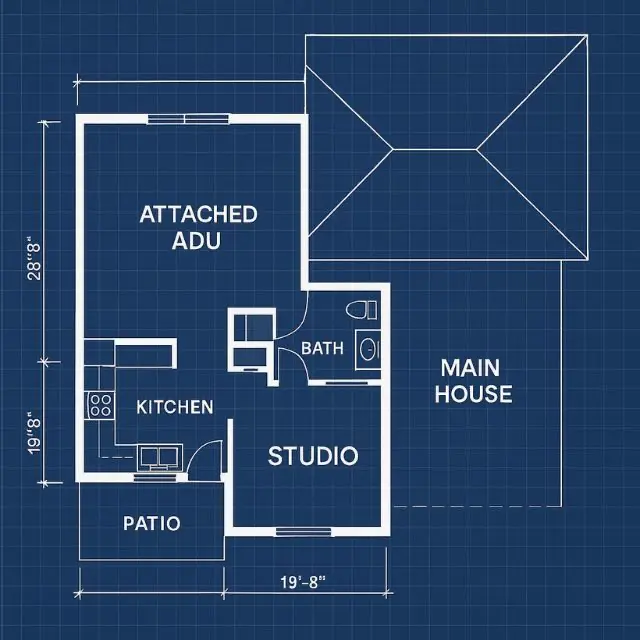
Attached ADUs
• May be up to 1,200 sq. ft., but not exceed 50% of the primary home’s floor area
• Must be at least 800 sq. ft., regardless of size restrictions
• Follow same setback rules as detached units
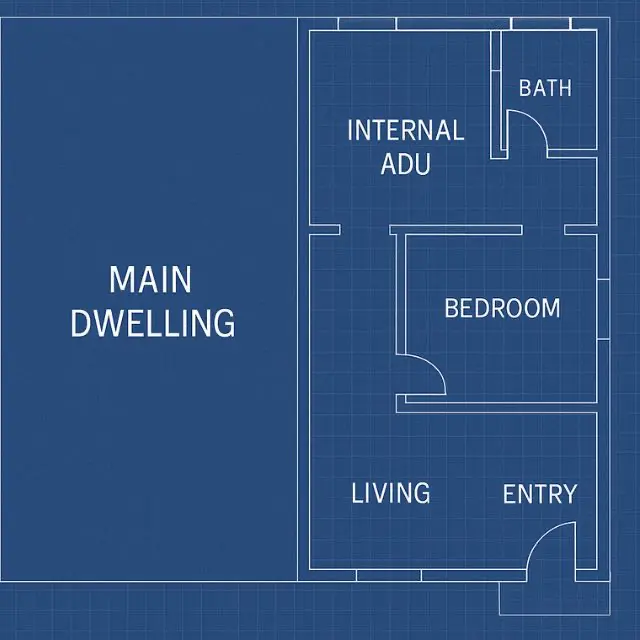
Conversion (Internal and Garage) ADUs
• If converting space inside an existing structure (like a garage), no setbacks are required if the existing footprint remains unchanged
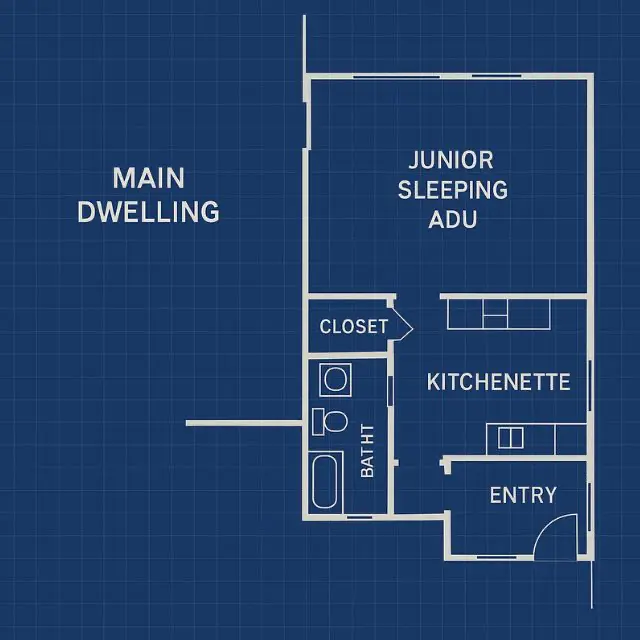
Junior ADUs (JADUs)
• Must be 500 sq. ft. or less
• Located within the main home
• May share a bathroom with the main residence
ADU Height Limits
Height restrictions vary depending on whether the ADU is detached or part of an existing structure:
- Detached ADUs: Up to 16 feet in most areas; 18 feet allowed if within half a mile of public transit
- Above Garage ADUs: Up to 25 feet
- Attached ADUs: Can match the height of the primary residence, up to two stories, where zoning allows
The City of Riverside, for instance, allows heights up to 35 feet in most residential zones, but always verify with your local planning office.
Zoning & Eligibility Checks
Before drafting plans, check your property for:
The good news? Most standard residential lots in Riverside County qualify. If there’s any uncertainty, Honeywill can walk you through it step by step.
- Zoning compliance (we’ll help you verify this)
- Flood zone status — use the FEMA Flood Map tool Click Here for FEMA Flood Map
- Environmental constraints — areas with sensitive wildlife, erosion hazards, or cultural resources may have restrictions
- Sewer and water capacity — some rural or hillside areas may have moratoriums in place
The good news? Most standard residential lots in Riverside County qualify. If there’s any uncertainty, Honeywill can walk you through it step by step.
ADU Parking Requirements (or Lack Thereof)
California law has eliminated most parking requirements for ADUs when:
- The property is within half a mile of public transit
- It’s in a historic district or area with on-street parking permits
- You’re converting an existing garage or structure
In most cases, no replacement parking is required when converting a garage into an ADU—a huge bonus for space-constrained properties.
Is an ADU Right for Your Riverside County Property?
Whether you’re creating space for family, generating rental income, or simply enhancing the value of your home, an ADU can be a smart, flexible investment—especially here in Riverside County, where legislation and property conditions often favor these types of builds.
At Honeywill Construction, we’re more than just builders—we’re trusted partners in the process. With over 20 years of experience and a strong record of delivering on-time, high-quality results, we specialize in making the ADU journey as smooth and stress-free as possible. From Hemet and Menifee to Palm Desert, Idyllwild, and Rancho Mirage, we’ve helped homeowners across the county turn unused space into smart, functional living.
Thinking about adding an ADU? Let’s talk about your goals and help you build the right plan.
Call us today at 951-294-0194 or send us a message to schedule your free consultation.
Want even more insight before you begin? Don’t miss our Ultimate Guide to Hiring a Kitchen Remodeler in Riverside County — packed with expert tips on budgeting, vetting contractors, and avoiding costly mistakes (many of which apply to ADUs too!).
Riverside County ADU Resource Links:
California Department of Housing & Community Development – ADU Handbook
https://www.hcd.ca.gov/policy-and-research/accessory-dwelling-units
→ Statewide laws and best practices for homeowners planning to build an ADU in California.
Riverside County ADU FAQ
What are the current ADU regulations in Riverside County?
Riverside County follows both California state ADU laws and local ordinance 348.4926, which outlines specific guidelines for height, lot coverage, setbacks, and parking. These regulations vary slightly between incorporated cities and unincorporated county areas. It’s essential to work with a contractor who understands local zoning and permitting.
Do I need a permit to build an ADU in Riverside County, CA?
Yes, you must obtain permits through your local city or the Riverside County Planning Department, depending on your location. Permits typically cover planning, building, electrical, plumbing, and mechanical work. We can manage this entire process for you.
What zoning is required for an ADU in Riverside County?
Most residential zones (R-1, R-A, etc.) permit ADUs. Properties must meet certain conditions like access, lot size, and infrastructure. Honeywill Construction ensures zoning compliance before design begins.
Can I build a detached ADU and a Junior ADU (JADU) on the same lot?
Yes—under California law, most single-family lots may include one detached ADU and one JADU. However, each city may impose limits, so it’s best to verify with your local jurisdiction.
What are the setback requirements for ADUs in Riverside County?
Per state law, minimum side and rear setbacks are 4 feet for new construction ADUs. Front yard and easement setbacks vary by zone, and attached ADUs often follow primary dwelling rules.
Do I have to provide parking for an ADU in Riverside County?
In most cases, no. State law eliminates parking requirements if the ADU is within ½ mile of public transit, in a historic district, part of an existing home/structure, or if on-street parking is available.
What’s the difference between a JADU and a full ADU?
JADU (Junior ADU) is created from existing space in the home (e.g., bedroom or garage), limited to 500 sq. ft., and may share a bathroom.
Full ADUs can be attached or detached, up to 1,200 sq. ft., with full kitchen and bath.
Are ADUs allowed on properties with septic systems or in rural zones?
Yes—but you may need to verify your septic capacity with the County Environmental Health Department. Many rural areas in Riverside County are ADU-friendly.
Do ADUs have to comply with Title 24 and California Energy Code?
Yes. ADUs must meet the latest energy efficiency standards under Title 24, including insulation, ventilation, lighting, and energy-efficient HVAC systems.
Can an ADU share utilities with the main house?
Yes. ADUs may share or have separate utilities depending on your goals and budget. Honeywill Construction will walk you through what’s best for your setup.